


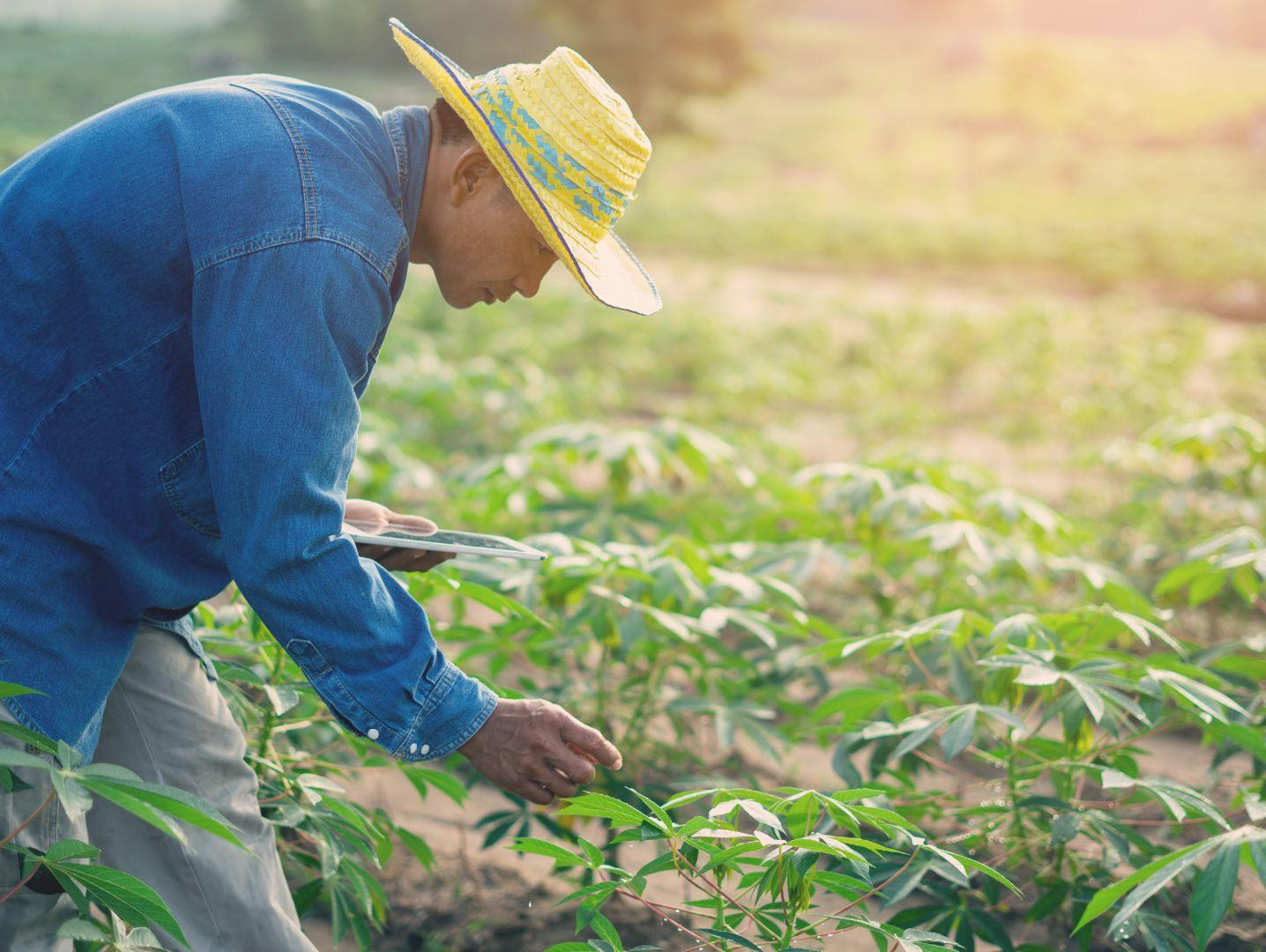
The Bill and Melinda Gates Foundation (the Gates Foundation), the Seeker for this Innocentive Challenge, is looking to realize the agricultural potential of Cassava (Manihot esculenta), a cornerstone crop for small farmers across Sub-Saharan Africa (SSA), and to convert the crop into a powerful driving force of the economic development of the SSA region. To achieve this objective, some biological constraints of the Cassava plant must be overcome.
The Gates Foundation, therefore, wants to create a roadmap to an “ideal” variety of Cassava, a crop that will combine the production power of sugarcane with genetics of maize.
More specifically, the Challenge is looking for a comprehensive list of constraints preventing existing Cassava varieties from becoming an “ideal” crop, particularly limitations to breeding and production. Production can include stem cuttings, planting, harvest, and tuber storage. It is also looking for a detailed list of genetic interventions, for each identified constraint, capable of overcoming this constraint. This list should include specific genetic targets and specific ways of changing these targets in the desirable way. The comprehensive roadmap should also identify those improvements possible within 5 years and 10 years, as well as those achievable within a longer (15-20 years) timeframe.
Cassava (Manihot esculenta) is a cornerstone crop for small farmers across Sub-Saharan Africa (SSA). An estimated 450–500 million people in the SSA region rely on it as a staple food and income source, and globally Cassava supports up to a billion people in more than 100 countries. Its roots are a major source of carbohydrates; leaves are eaten as a green vegetable rich in protein and vitamins; and dried chips and starch are used in animal feed and ethanol, textiles, paper, and food processing.
Cassava is attractive to small farmers because it can grow on relatively poor (acidic and low fertility) soils with often erratic rainfall, using only family labor and few purchased mechanical tools. This resilience explains why it is widely planted on marginal land and used as a “risk-buffer” or famine-reserve crop when cereals fail.
Cassava planting is almost entirely vegetative: farmers plant 15–25 cm stem cuttings (around 10,000 plants per hectare) rather than true seeds; each cutting produces a new, genetically identical clone of the mother plant. Under the conditions for the SSA region, average yields are only about 7–10 tons fresh roots per hectare (t/ha), as opposed to 20–40 t/ha routinely achieved in well-managed trials and even up to 80–90 t/ha under ideal experimental conditions.
Unfortunately, the low Cassava yields are caused not only by suboptimal agricultural practices, but also by the biological constraints of Cassava plant that make its genetic improvement difficult. The major among these constraints are:
- The crop is mainly propagated vegetatively (by stem cuttings), which preserves bad alleles and slows the removal of harmful genetic variations.
- Multiplication rates via stem cuttings are low compared with seed-propagated crops, so spreading new varieties widely takes several (typically 3-5) years.
- Flowering is often late, irregular, and genotype-specific; some elite clones flower poorly or not at all, and flowering times are highly sensitive to environment.
- As a crop, cassava exhibits high genetic heterogeneity; most varieties are complex mixtures of alleles. Crossing two heterogeneous parents creates very diverse progeny making it hard to “fix” desirable combinations.
- The breeding cycle is long: it commonly takes 5–8 years or more to move from initial crosses, through clonal evaluation and regional trials, to release of a new variety.
- Fresh cassava roots deteriorate within 2–3 days after harvesting due to post-harvest physiological degradation and microbial spoilage, which is exacerbated by the lack of affordable processing equipment and adequate drying infrastructure.
To realize the real agricultural potential of Cassava and to convert the crop into powerful driving force for economic development in SSA, these constraints must be overcome.
The Challenge
The objective of this Challenge is to create a roadmap to an “ideal” variety of Cassava, a crop that will combine the production power of sugarcane with ease of genetic improvement of maize breeding. That means that this “ideal” Cassava will have the following important traits:
- Much higher, more reliable yields, in terms of tuber biomass and starch.
- Faster, more predicable flowering and shorter breeding cycles; potential for true-seed use (apomixis or seed-propagated lines) to break the current bottlenecks around planting stem cuttings.
- Easy, repeatable gene editing and trait stacking (disease resistance, delayed PPD, starch quality, drought/heat tolerance, etc.).
- Better fit for mechanization and industrial supply chains (uniform stands, synchronized maturity, ratoon-like regrowth or easier replanting).
- More efficient farmer production systems that standardize or improve farmer planting systems.
To create such a roadmap, Solvers are expected to achieve two major things:
First, they’re expected to create an exhausting list of constraints preventing existing Cassava varieties from becoming an “ideal” crop on par with sugarcane and maize (10-12 items). Such a list should incorporate and expand on the list of constraints presented above but also include constraints that have been previously overlooked in the Cassava literature.
Second, for each identified constraint, identify at least one (and, ideally, a few) genetic interventions capable of overcoming this constraint within a and mapped against a 5- 10- and 20-year time horizons. The description of a genetic intervention should include specific genetic targets and the specific ways of changing these targets in the desirable way. The preference should be given to strategies that use gene editing as the primary technology (CRISPR-Cas9, CRISPR-Cas12a, CRISPRi/CRISPRa, base editors, etc.) with the idea that a multiplexed gene editing strategy could solve multiple problems in a single step. The choice of targets and genetic interventions must be thoroughly justified with appropriate literature references.
Important! Priority will be given to traits that create opportunities for seed system development and production increase such as development of improved and modernized planting systems. Additionally, solution proposing disease resistance or abiotic stress tolerance traits will be considered too.
Also important, priority will be given to genetic interventions that have can be translated to other vegetatively produced crops of importance to small holder farmers (such as yams, sweet potato, and banana).
Awards:- The best solution has the opportunity to win the award from $5,000 to $20,000 for meeting several of Solution Requirements as solely determined by the Gates Foundation.
Deadline:- 12-01-2026