

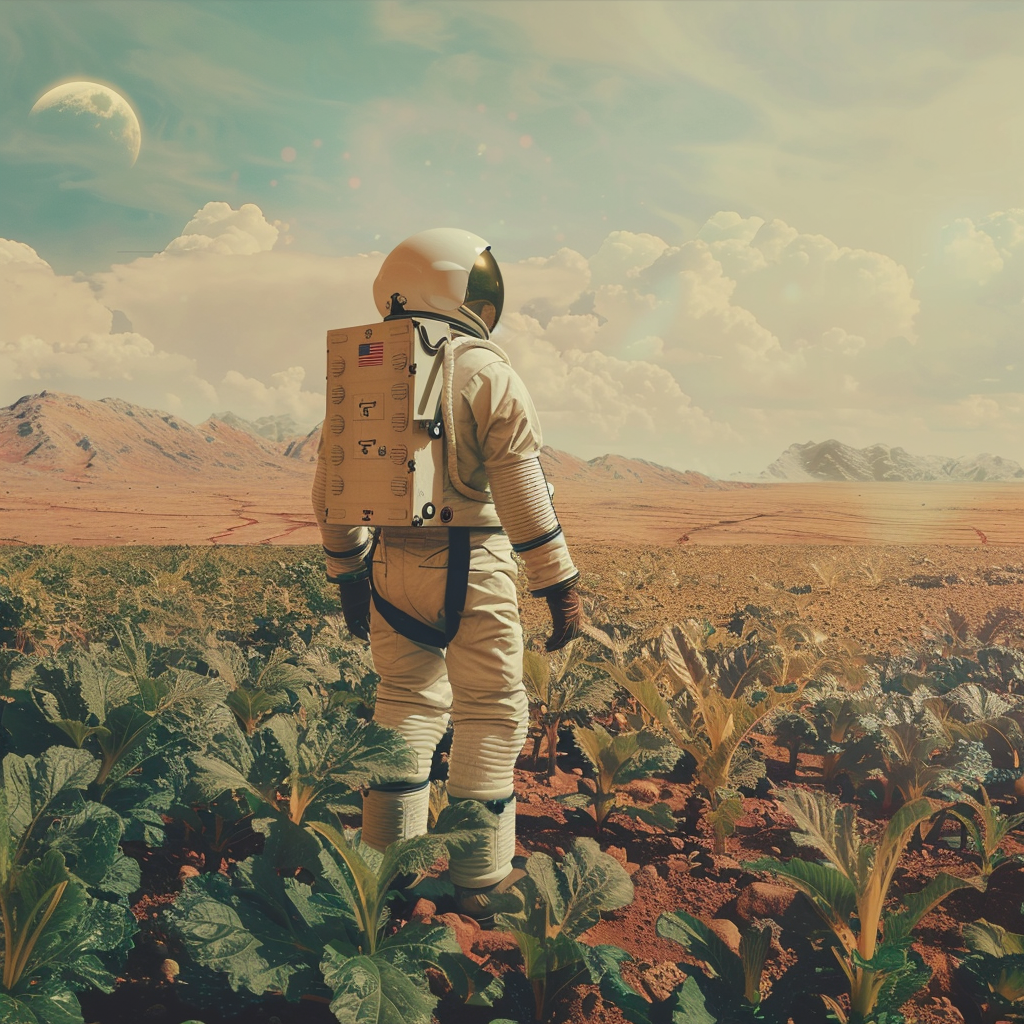
Mars to Table is an international competition within NASA’s Deep Space Food Challenge series, administered by the Methuselah Foundation.
The Challenge invites multidisciplinary teams to design complete, nutritionally sufficient integrated food systems for long-duration human missions, with Teams spending approximately seven months developing a Mars surface habitat food system through September 2026.
Mission-critical infrastructure
As humans prepare for sustained lunar and Martian missions, food must evolve from cargo into infrastructure.
Multi-year planetary expeditions demand Earth-independent, integrated food systems that can operate reliably under extreme constraints.
Mars to Table challenges teams to design systems that reduce reliance on Earth resupply, integrate with life support systems, and support sustained surface operations while maintaining crew health, morale, and performance.
Terrestrial impact
Technologies developed for Mars can also transform food systems on Earth, including applications in remote communities, disaster response, defense and expeditionary operations, extreme environments, and urban food resilience.
By designing food systems that operate reliably under extreme constraints, Mars to Table highlights approaches that reduce dependence on fragile supply chains, maximize resource efficiency, and enable food production where traditional systems fall short.
In doing so, the Challenge bridges space exploration with Earth’s most demanding food challenges.
- Deliver complete, safe, and enjoyable nutrition meeting 100% of daily nutritional needs with variety, safety, and palatability for sustained missions.
- Operate as fully integrated, end-to-end systems spanning production, processing, preparation, storage, and waste management as a cohesive whole.
- Minimize inputs while maximizing resilience and reuse combining pre-packaged, bulk, and in-situ food sources and integrating with life support systems for closed-loop or near closed-loop operation.
Key goals and constraints include limiting Earth-provisioned foods to no more than 50% of the system and integrating with environmental control and life support systems to enable efficient resource reuse.
Awards:-
NASA Prize Purse
for U.S. Teams
-
1st Place: Up to $300,000 awarded to one Team selected as the overall Challenge winner
-
2nd Place: Up to $200,000 awarded to one Team
-
3rd Place: Up to $100,000 awarded to one Team
-
Category Awards: Up to three $50,000 awards recognizing exemplary achievements in specific focus areas. See Rules for more info.
NASA Recognition
for International Teams
-
International Teams are eligible to participate and receive recognition but are not eligible for NASA prize money.
-
Up to three International Teams may be named the International Winner and International Runners-Up of the Challenge.
Deadline:- 22-05-2026