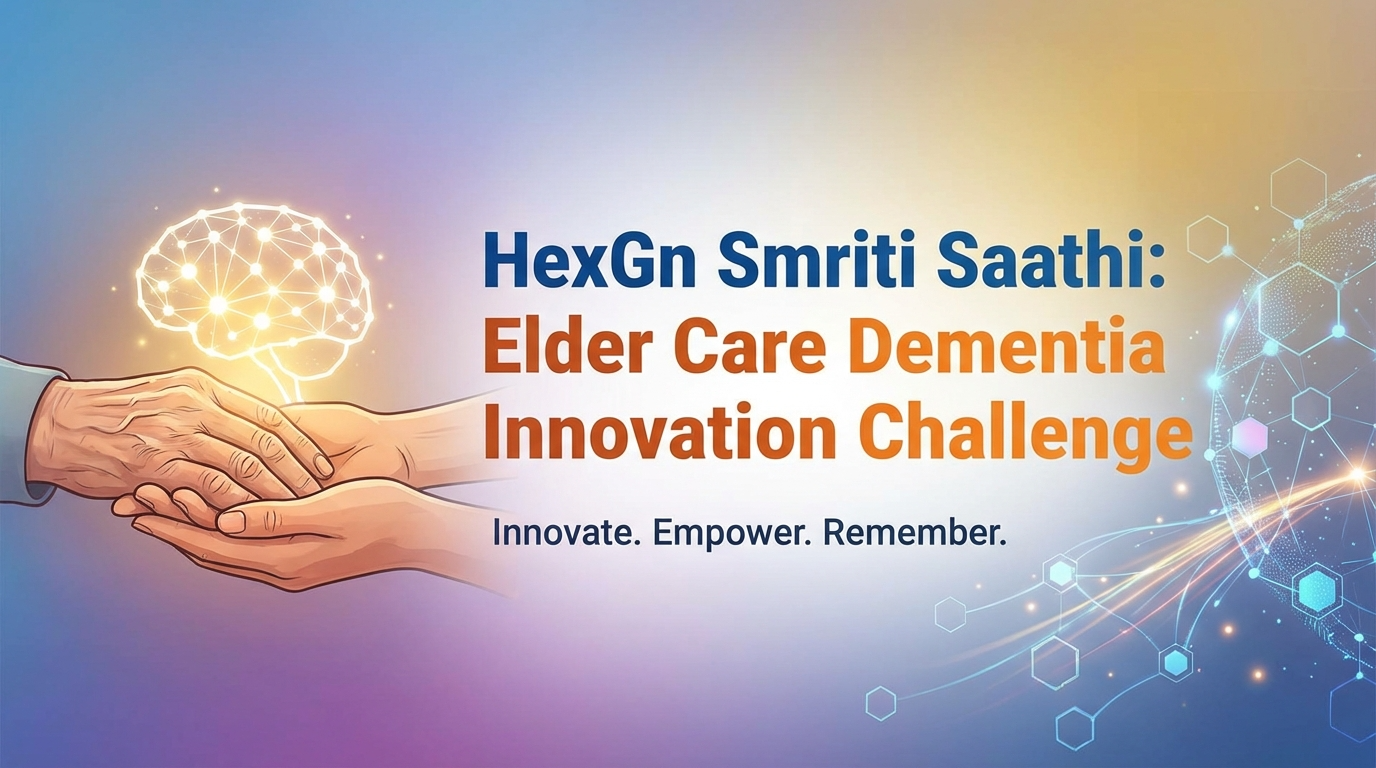
The HexGn Smriti Saathi Grand Challenge, in collaboration with Startup India, is a national initiative to identify and scale innovative technology solutions for the elderly living with dementia and their caregivers. With over 5.3 million people in India living with dementia—a number expected to double by 2050—there is an urgent need for interventions that go beyond traditional care.
We are seeking startups that leverage AI, IoT, Assistive Tech, and Digital Health to bridge gaps in early diagnosis, cognitive rehabilitation, and caregiver support. This challenge aims to foster an ecosystem where aging with dignity is supported by modern technology, ensuring safety, independence, and improved quality of life for India’s silver population. The program is supported by Shiv Nadar University Institution of Eminence (IoE) as the Academic Partner, AI Centre of Excellence, Shiv Nadar IoE as the Knowledge Partner, and Emoha as the Lead Partner.
Program Details
Detailed Eligibility Criteria
Entity Status & Recognition
1. DPIIT Recognition: The applicant must be a startup recognized by the Department for Promotion of Industry and Internal Trade (DPIIT). (Startups without recognition may apply but must obtain it before the final shortlisting).
2. Entity Type: Only Private Limited Companies, Limited Liability Partnerships (LLPs), or Registered Partnership Firms are eligible.
3. Age of Startup: The startup must not have completed 10 years from the date of its incorporation/registration.
4. Turnover: The annual turnover of the startup for any of the financial years since incorporation must not have exceeded INR 100 Crore.
Solution Maturity (TRL Level)
1. Minimum Requirement: The challenge is open to startups with at least a Minimum Viable Product (MVP) or a Proof of Concept (PoC) that has undergone initial validation.
2. Technology Readiness Level (TRL): Preference will be given to startups at TRL 4 (Lab Validation) or higher. Ideation-stage startups are only eligible if they provide a strong research-backed feasibility report.
Thematic Alignment
Solutions must specifically address one or more of the following areas in Elder Care/Dementia:
1. Early Detection: Digital biomarkers, AI-based screening, or non-invasive diagnostic tools.
2. Patient Safety: Wearables or IoT for fall detection, wandering prevention, and geo-fencing.
3. Caregiver Support: Solutions reducing caregiver burden, training platforms, or mental health tools for families.
4. Cognitive Support: Gamified rehabilitation, VR-based reminiscence therapy, or memory aids.
Innovation & Scalability
1. Originality: The solution must be an original innovation. Entities formed by splitting up or reconstructing an existing business are not eligible.
2. Scalability: The business model must demonstrate the potential for high-scale adoption across diverse Indian geographies (urban and rural).
3. Affordability: Given the Indian context, the solution should aim to be cost-effective for middle and lower-income families.
Regulatory & Compliance (Healthcare Specific)
1. Data Privacy: Startups must demonstrate compliance with the Digital Personal Data Protection Act (DPDP), ensuring the privacy of sensitive health data for the elderly.
2. Medical Standards: If the solution involves a medical device, it should ideally comply with CDSCO (Central Drugs Standard Control Organisation) guidelines or relevant ISO standards (e.g., ISO 13485).
3. Clinical Validation: Startups that have conducted preliminary clinical trials or have tie-ups with geriatric departments of hospitals will be prioritized.
Team Composition
1. The startup must have a dedicated core team with technical expertise.
2. Preferred: Teams that include or have formal advisors from the medical field (Neurologists, Geriatricians, or Mental Health Professionals).
Redefining Dementia Care: From Early Detection to Holistic Support
Dementia care in India faces three critical bottlenecks:
(1) Late Diagnosis & Stigma – Cognitive decline is too often dismissed as normal aging, and accessible, culturally tailored early-screening tools (especially in local languages) are nearly absent.
(2) Caregiver Burnout – Over 90% of dementia care is shouldered by family members, leading to immense emotional and financial strain; yet few solutions exist for patient safety (preventing wandering, detecting falls) or for providing remote guidance and respite to caregivers.
(3) Limited Post-Diagnosis Support – After diagnosis, patients have minimal access to personalized cognitive therapy or smart-home adaptations that help retain independence.
We seek innovative solutions that directly address these gaps: Early Screening (e.g. digital biomarkers, AI-driven voice or gait analysis for early detection), Safety & Monitoring (IoT wearables or sensors to prevent wandering and falls without compromising privacy), Cognitive Engagement (VR/AR and gamified tools for memory stimulation and reminiscence therapy), and Caregiver Enablement (platforms for caregiver training, mental health support, and real-time patient monitoring for families). By tackling these areas, startups can improve quality of life for India’s elders and empower caregivers – a massive unmet need and opportunity.
Awards:-
1. Potential for Pilot Opportunities Shortlisted startups may be considered for pilot deployments. Facilitation of such opportunities will be subject to the readiness of the startup’s solution and the specific requirements/discretion of participating partner institutions.
2. Access to Expert Mentorship The challenge aims to provide startups with an opportunity to interact with a network of industry experts and medical professionals. Mentorship sessions are subject to the availability of experts and will be provided on a case-by-case basis.
3. Networking & Showcase Platforms Selected startups may be given a platform to showcase their innovations to a curated audience of stakeholders, which may include investors, healthcare providers, and industry leaders. Please note that participation does not guarantee investment or commercial contracts.
4. Visibility and Recognition Winners and finalists may be featured in various promotional materials, newsletters, or reports related to the challenge. This is intended to provide ecosystem visibility and does not constitute a formal endorsement of the product by the organizers.
5. Guidance on Regulatory Pathways Startups may receive general information and guidance regarding the regulatory landscape and standards relevant to elder care and dementia. This information is for educational purposes only and should not be treated as professional legal or regulatory advice.
6. Cloud & Software Credits (Subject to Partner Terms) Startups may be eligible to apply for third-party credits (such as cloud services) provided by ecosystem partners. The disbursement of these credits is solely at the discretion of the third-party providers and subject to their respective terms and conditions.
Deadline:- 26-01-2026