


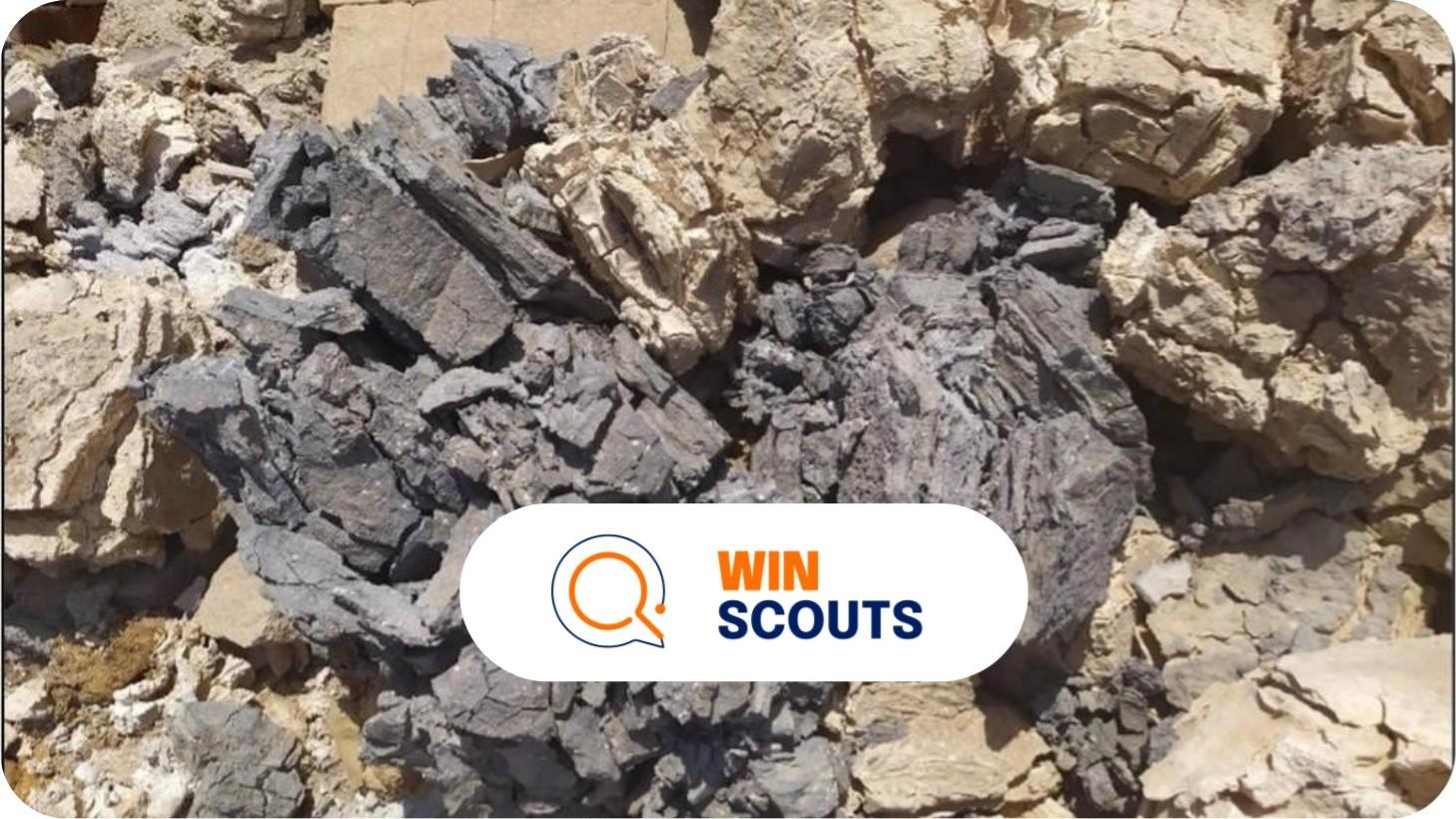
ICL, the Seeker for this Wazoku Crowd Challenge, is looking for improved technology to utilize large volumes of the mixture of chloride salts and MgO.
ICL has developed a process of utilizing large volumes, hundreds of thousands of tons, of the mixture of chloride salts and MgO. However, this process has certain shortcomings, such as high investments cost, the need to build special plants (requiring construction permits and creating additional infrastructure), high maintenance, etc.
By posting this Challenge, ICL is looking for existing industrial technologies — that is, those that can be purchased and used immediately — that would allow this process to be improved by simplifying and automating it, which will lead to reducing investment and maintenance costs and operational complexity.
WIN Scouts are very much invited to participate, this being any Solver who can propose a potentially suitable partner (startup or expert) from your network. As a WIN Scout, by referring a relevant partner you will be recognized with a share of a separate $500 recognition award if your referral meets certain minimum criteria of detail, relevance, and format. The input required is guided during the submission process for WIN Scouts below.
Wazoku welcomes WIN Scouts and referred partners to become active members of Wazoku Innovation Networks (WIN).
In this Prize Challenge, Solvers may:
- Submit ideas of their own.
- Submit third-party information that they have the right to use and further, the authority to convey to the Seeker this right with the right to use and develop derivative works.
- Submit information considered in the public domain without any limitations on use.
Carnallite, a raw material obtained by concentrating Dead Sea water, is a source of valuable chemical products, including metal magnesium.
As a by-product of metal magnesium production from Carnallite, hundreds of thousands of tons of the mixture of chloride salts and MgO have accumulated over the years.
The mixture is composed of about 60% chloride salts (NaCl, KCl.MgCl2.6H2O, KCl.MgCl2) and up to 40% MgO; some other, minor impurities are also present.
Given the volume of the mixture, it occupies large spaces. Besides, the mixture includes chemical compounds that can be re-used. For example, KCl is the most common source of potassium for fertilizers, while MgO can be used in construction as an addition to cement or for manufacturing of heat-resistant bricks.
The full utilization of the chloride/MgO mixture will therefore result in a more sustainable environment and will simultaneously create new commercial opportunities.
The Challenge
Our current method of the utilization the chloride/MgO mixture includes four steps:
- Grinding: The mixture is first ground into coarse particles by a grinding machine.
- Dissolving: The ground mixture is then dissolved in water at the concentration of up to 25% w/v. This separates the soluble chloride salts from the insoluble MgO.
- Chloride salt utilization: The water containing the dissolved chloride salts is then extracted — by using clarification ponds, filter-press, or any other appropriate means — and removed to be re-used in other applications..
- MgO utilization: The remaining MgO is recovered and used in two ways:
- Filling sinkholes: It can be used as a filler material for sinkholes, providing structural support and stability.
- Neutralizing acidic streams: It can be used to neutralize acidic streams by reacting with excess acid.
A major shortcoming that we see with this process is that it requires building a special plant for processing the mixture. This, in turn, leads to the following complications:
- A plant requires obtaining construction permits (which takes time) and creating necessary infrastructure (roads, parking space, etc.).
- The process involves bulky and expensive equipment (bulldozers and cranes) to move large volumes of the mixture and large water tanks for dissolving it. Processing 50-100 tons of the mixture in one hour requires 2-3 shifts a day and buffers for grinded solids, water for dissolving, etc. Continuous automated reliable process is much preferred.
- The process requires a significant amount of labor and constant human operational control.
All this results in high investment and operational costs: currently, the price of treating one ton of the mixture exceeds $30, making this opportunity less economically attractive than we’d like it to be.
An alternative approach could be to use the mixture “as is,” that is, without dissolving it in water. However, a solid technological basis for such an approach hasn’t yet been developed. In particular, a requirement to transport high quantities of the mixture to their target users — often at long distance — makes this approach too costly.
The goal of this Challenge is therefore to dramatically simplify our current process by eliminating the need to build plants. Instead, we envision that a simple, potentially automatable process, can be developed that would not require heavy equipment and large amounts of labor to be involved.
We also envision that the proposed process would be based on technologies that are already available, that is, those that can be purchased and used immediately.
Ideally, the proposed technology will be of the “plug-and-play” style, that is, utilizing highly mobile equipment that would allow the process to be used everywhere, with a minimum setting time.
Our eventual goal is to reduce the cost of treating 1 ton of the mixture to less than $30 and, ideally, to less than $20.
We’re open to any suggestions for an alternative process, the one that could treat the mixture “as is,” that is, without dissolving it in water. However, such an alternative process should meet the requirements mentioned above for an improved version of our correct process, including the all-important requirement of cost reduction (to below $30 per ton of the mixture).
SOLUTION REQUIREMENTS
We welcome any innovative approach for as long as the proposed solution meets the following major Solution Requirements:
- The proposed solution will result in the cost of the utilization process of the mixture to below 30$ per ton and, ideally, below $20 per ton.
- The proposed solution will not require building a plant but will allow the utilization process to take place in any place.
- The proposed solution will be scalable to the mixture volume of at least 15,000 tons per year (hundreds of thousand tons over a few years).
- The proposed solution will allow to automate the process so that no more than a single operator could spend no more than a few hours a day to monitor the process.
- The proposed solution will be completely sustainable, i.e. will not introduce any environmental hazards, nor represent occupational risks to the operator.
- Ideally, the proposed solution will not require any pre-treatment of the chloride/MgO mixture.
Important! We would like to emphasize that we’re looking for technological approaches that are already available. The Solvers are therefore encouraged not only to describe the proposed improvements but also list the providers of the proposed technologies and/or sources of commercially available equipment. Solutions providing such information will be given special consideration.
Confidential Information guidance; during the submission process, you will have the option to let ICL know if you have further relevant information, consisting of IP rights that may be of interest to ICL, that you are only prepared to disclose if ICL proposes an acceptable award offer.
Awards:- $15,000
Deadline:- 06-05-2024