

The Seeker for this Wazoku Crowd Challenge is looking for new approaches to prevent the CO2-induced corrosion of carbon steel pipes located far from their access point.
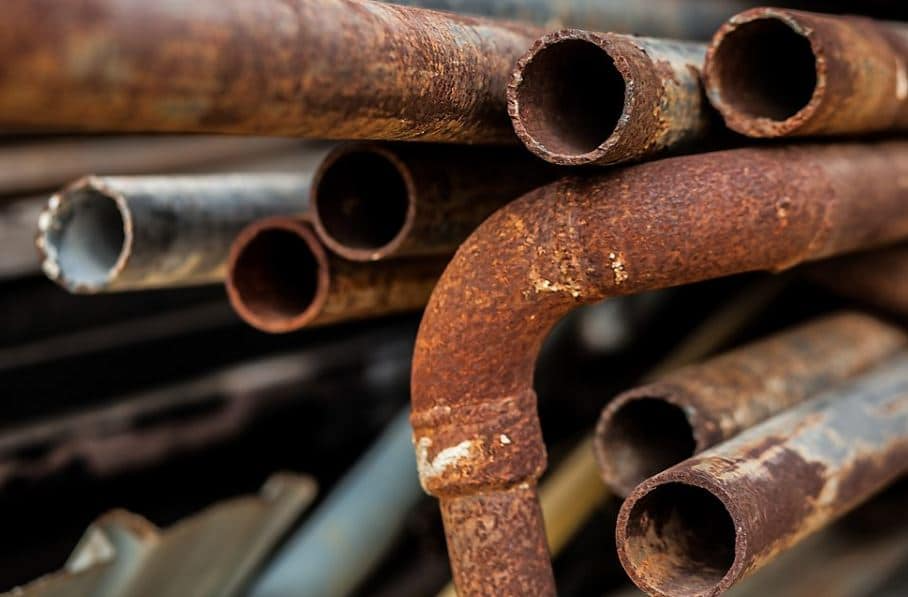
Unlike stainless steel, carbon steel lacks any significant amounts of alloying elements, such as chromium, that forms a protective oxide layer against rust. This makes carbon steel pipes more susceptible to corrosion (often called aqueous corrosion) when exposed to moisture and oxygen.
Several techniques have been developed to prevent negative consequences of aqueous corrosion on carbon steel pipes. Unfortunately, these techniques become much less effective under certain conditions, such as when large volumes of CO2 are pumped into the pipe system.
The objective of this Challenge is therefore to design new approaches to protecting existing carbon steel pipes from CO2-induced corrosion.
By taking part in this Prize Challenge, you are granting the Seeker a non-exclusive right to use your submitted information. However, the Seeker must determine award winners within 45 days from the start of evaluation, otherwise they lose this right of use.
The Challenge requires a written proposal to be submitted. There will be a guaranteed award pool of $30,000, with at least one award of $15,000 or larger and no award being smaller than $5,000. Award distribution (or allocation) will be contingent upon the theoretical evaluation of the proposals.
Many industrial processes require building and exploiting systems of tubes and pipes for transportation. These systems may become large, long and quite sophisticated.
Many such pipe systems, especially existing infrastructure , are equipped with carbon steel tubes and pipes. Unlike stainless steel, carbon steel lacks any significant amounts of alloying elements, such as chromium, that forms a protective oxide layer against rust. This makes carbon steel pipes more susceptible to corrosion (often called aqueous corrosion) when exposed to moisture and CO2.
To prevent aqueous corrosion of carbon steel pipes, three major groups of techniques are commonly employed:
- Protective Coatings: Treating the inside surface of the pipe with special paints or internal plastic coatings that create a barrier between the metal surface and the corrosive environment.
- Galvanization: Coating the carbon steel with a layer of zinc. Being more reactive than steel, zinc provides cathodic protection, sacrificing itself to protect the underlying metal.
- Corrosion Inhibitors: Adding corrosion inhibitors, such as ASCOTRAN®-L, to the fluid within the pipes. ASCOTRAN®-L creates a hydrophobic protective film on the metal surface layer that dramatically reduces electrochemical reactions leading to corrosion.
These three techniques become significantly less effective when used under certain regimes of the pipes’ exploitation, for example, when large volumes of CO2 are pumped into the pipe system.
The Challenge
These are the major factors making this challenge difficult to solve:
- Water-Induced Acidity: When CO2 is
- Inability to Directly Apply Coatings: The existing pipeline system cannot be accessed directly, so any coating proposals will require remote application (ex: by being added into a fluid and circulated).
- Limited Effectiveness of Corrosion Inhibitors: The dynamic environment of CO2 and water makes it difficult to apply conventional corrosion inhibitors.
- Difficulty to Deliver Technical Solutions: Exacerbating the problem of delivery of any technical solution is the need to reach deep and far-away pipe locations in the system (>1 km).
The objective of this Challenge is therefore to design new approaches to protect carbon steel pipes from the CO2-induced corrosion, while addressing the structural constraints of the existing pipeline system as well as the chemical conditions within it.
SOLUTION REQUIREMENTS
We’re open to any innovative idea, however unorthodox, for as long as the proposed solution meets the following Solution Requirements:
- The proposed solution should be able to protect carbon steel pipes under the environment of high-pressure (up to 6000 PSI) CO2 and water with pH as low as 4.
- The proposed solution should be able to withstand periodic changes in pressure between 500 and 4,500 PSI, salinities up to 250,000 ppm, and temperatures up to 250º F (121º C)
- The proposed solution should be able to reach a remote location to protect carbon steel pipes as far as a few kilometers away from deploying point.
- The proposed solution should be fully operational, that is, without measurable loss in performance for at least 1 year (if operating as a coating) or at least 1 month (if operating as a fluid additive).
- Ideally, the proposed solutions should be simple and cost effective enough to be implemented in the field for testing within 6 months.
- The proposed solution will be completely safe for humans to operate and pose no environmental risk.
At the same time, we’re not going to accept solutions that:
- Are purely conceptual ideas with no experimental or lab support
- Increase the CO2 footprint of the operating well.
This Prize Challenge has the following features:
1. By taking part, you are granting the Seeker a right to use your submitted information. However, the Seeker must determine award winners within 45 days from the start of evaluation, otherwise they lose this right of use.
2. There will be a guaranteed award pool of $30,000, with at least one award of $15,000 or larger and no award being smaller than $5,000.
3. The award distribution will be determined after theoretical evaluation of the proposals by the Seeker.
4. Solvers may:
- Submit ideas of their own,
- Submit third-party information that they have the right to use and further, the authority to convey to the Seeker this right with the right to use and develop derivative works,
- Submit information considered in the public domain without any limitations on use.
5. The Seeker may also issue “Honourable Mention” recognitions for notable submissions that are not selected for monetary awards.
6. The Seeker may wish to partner with the Solver at the conclusion of the Challenge. Please indicate your interest in partnering.
YOUR SUBMISSION
Please login and register your interest, to complete the submission form.
The submitted proposals must be written in English, and in your submission form response and attachments, you should include:
1. Participation type – you will first be asked to inform us how you are participating in this challenge, as a Solver (Individual) or Solver (Organization).
2. Solution Level – the Technology Readiness Level (TRL) of your solution.
3. Partnering – there may be an opportunity to partner at the conclusion of this Challenge. Please indicate if partnering is of interest to you.
4. Problem & Opportunity – highlight the innovation in your approach to the Problem, its point of difference, and the specific advantages/benefits this brings (up to 500 words).
5. Solution Overview – detail the features of your solution and how they address the Solution Requirements (500 words, there is space to add more in the summary field below, and to add any appropriate supporting data, diagrams, etc.). Include code if available.
6. Experience – Expertise, use cases and skills you or your organization have in relation to your proposed solution (up to 500 words).
7. Solution Risks – any risks you see with your solution and how you would plan for this (up to 500 words).
8. Timeline, capability and costs – describe what you think is required to deliver the solution, estimated time and cost (up to 500 words).
9. Online References – provide links to any publications, articles or press releases of relevance (up to 500 words).
Wazoku encourages the use by Solvers of AI approaches to help develop their submissions, though any produced solely with generative AI are not of interest.
Find out more about participation in Wazoku Crowd Challenges.
Submissions to this Challenge must be received by 11:59 PM (US Eastern Time) on February 10th, 2025.
Late submissions will not be considered.
Your submission will be evaluated by the evaluation team first reviewing the information and content you have submitted on the submission form, with attachments used as additional context to your form submission. Submissions relying solely on attachments will receive less attention from the evaluation team.
After the Challenge submission close date, the Seeker will complete the review process and decide with regards to the winning solution(s) according to the timeline in the Challenge header. Evaluation timeframe may be extended dependent on the number of valid proposals received. All Solvers who submit a proposal will be notified about the status of their submissions.
Awards:- US$30,000