

The Propulsion and Space Research Center (PSRC), part of the Technology Innovation Institute (TII), the Seeker for this Wazoku Crowd Challenge, is seeking a complete solution for a telemetry, tracking, and command (TT&C) data link between a sub-orbital sounding rocket and a ground station. All mechanical, electronic, and software components of the system will be included in the proposed solution designed by Solvers.
The Rocket Telemetry Challenge is open to innovators, start-ups, research institutes, and university students from anywhere in the world.
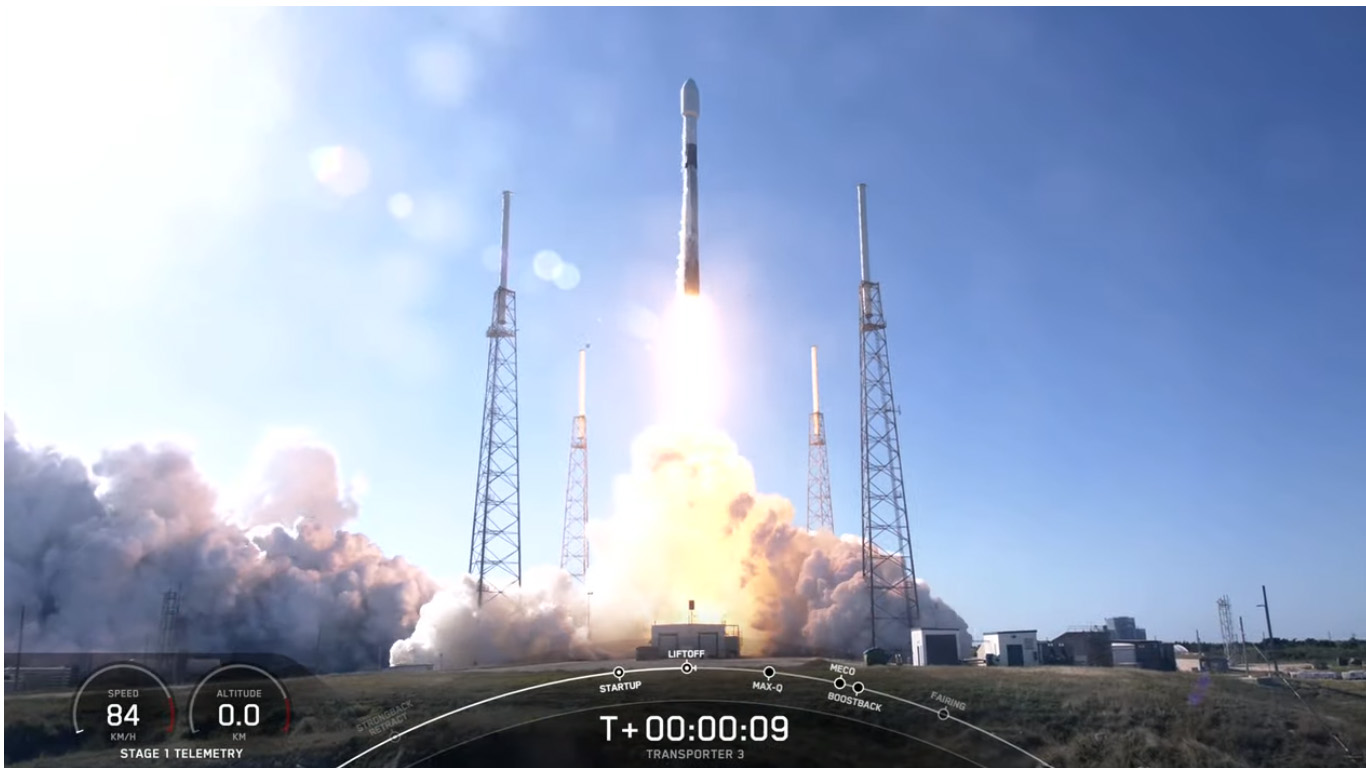
A sounding rocket is an instrument-carrying rocket vehicle designed to take measurements and perform scientific experiments during its sub-orbital flight. It is generally used to launch instruments to an altitude between weather balloons and satellites. Telemetry is the primary means of obtaining data from the rocket vehicle over its trajectory. Acquired data are recorded in the rocket and sent to the ground during the flight.
The total award pool for this Challenge is $55,000(USD), with Awards of $30,000(USD) for 1st Place, $15,000(USD) for 2nd Place, and $10,000(USD) for 3rd Place for meeting the Solution Requirements stated below.
As an exciting optional addition to the monetary award for Solvers that like to travel, three to five Solvers with the top solutions will be invited on a fully-paid trip to the UAE to prepare for and take part in an on-site demonstration of their solutions in 2025. You will be asked to state your interest in attending.
Your IP Rights are protected in this Prize Challenge; PSRC must award you to obtain non-exclusive rights. This Prize Challenge requires a written proposal to be submitted and Awards will be contingent upon the theoretical evaluation and experimental validation of your proposal by PSRC against the Solution Requirements.
To receive an Award, Solvers are required to grant non-exclusive rights to the Intellectual Property (IP) in their proposed solution. There is no assignment of IP Rights with this challenge. Solvers will retain all rights to any proposal not Awarded.
The Propulsion and Space Research Center (PSRC) drives global research and educational empowerment in Propulsion and Beyond Earth Exploration. Through partnerships with leading global institutions, our research advances aircraft propulsion, aerodynamics, computational methods and AI, and space exploration, with a focus on developing innovative propulsion technologies and promoting sustainability
PSRC is part of the Technology Innovation Institute (TII), a global scientific research center attracting the world’s foremost scientists and researchers. TII leads worldwide advances in artificial intelligence, autonomous robotics, quantum computing, cryptography and quantum communications, directed energy, secure communication, smart devices, advanced materials, and propulsion and space technologies, and biotechnology fields.
TII belongs to the Abu Dhabi Government’s Advanced Technology Research Council (ATRC), which oversees the technology research.
The Rocket Telemetry Challenge invites innovators, start-ups, research institutes, and university students from anywhere in the world with the skills, resources and knowledge, who are all eligible to participate in the Challenge, except:
- Employees of the TII and its affiliates; its parent company or other subsidiaries of the parent company;
- Employees of agents or suppliers of the TII or any of its affiliates, who are professionally connected with the Challenge or its administration;
- Members of the immediate families or households of the aforementioned;
- Any person or entity registered or ordinarily resident in a country that is on a sanctions list at any time during this Challenge (including, but not limited to, the Sanctions Lists maintained by the United States, the United Nations and the European Union).
Sounding rockets are relatively inexpensive rockets used to perform a variety of scientific missions during their short sub-orbital flights. They are generally used to carry instruments to an altitude between weather balloons and satellites, and research performed includes meteorology, aeronomy, astronomy, and remote sensing of the earth. Typically comprised of just a solid fuel rocket motor and a scientific payload, they are advantageous not only for their low cost but also the short lead time required to develop and build them.
PSRC is working on the development of a hybrid rocket engine to enable safe and cost-effective access-to-space solutions. The research and development roadmap includes launching sounding rockets powered by hybrid engines which will serve as technology demonstrators of increasing complexity, facilitating the development of hybrid rocket propulsion in UAE.
Telemetry is the primary means of obtaining data from the rocket vehicle over its trajectory. Acquired data are recorded in the rocket and sent to the ground during the flight. Data collected by the subject sounding rocket will include pressure and temperature, as well as altitude, spin rate, acceleration, and velocity. A video camera and GPS equipment will provide additional data. In addition to the data sent from the rocket, commands must be sent to the rocket from a ground station to initiate such phases as flight termination and parachute opening.
PSRC is seeking a complete solution for a telemetry, tracking, and command (TT&C) data link between a sub-orbital sounding rocket and a ground station. All mechanical, electronic, and software components of the system, in particular, the transmission chain including the emitter, the antennas and the receiver, as well as the software required for the data handling and transmission will be included in the proposed solution designed by Solvers. The emission part is embedded in the rocket and has several mechanical constraints.
PSRC is primarily interested in solutions with the potential to meet the following requirements:
Must have:
- The system (emitter, antennas, and receiver) shall work in the range of 10 km altitude and 10 km downrange.
- The system hardware to be installed in the nosecone of the rocket shall fit in a cylindrical space 15 cm in diameter and 30 cm in length.
- The system shall record on the onboard system and send to the ground station the real-time data acquired from pressure and temperature sensors as well as altimeter, spin rate, acceleration and velocity sensors. A video camera signal shall also be acquired and transmitted as well as GPS tracking data. Minimum data rate is 10 samples per second for 10 channels of data. Sensors and camera are not part of the proposed solution.
- Commands from the ground station (e.g. for flight termination and for parachute opening) shall be acquired by the onboard system. The telemetry system shall allow commands to be sent from the ground station to the vehicle with delay less than 100 ms.
- The system shall be able to withstand and operate at low temperature, 3g quasi-steady acceleration loads, and vibrations of up to 0.5g magnitude in the frequency range of 10-100 Hz; as well as humidity levels of up to 80%.
- The system must be capable of remaining operational for a minimum of 2 hours on ground without shutting down or running out of power.
- The data received from the telemetry should remain uninterrupted and free from interference throughout the entire operation.
- Transmissions shall utilize the most appropriate frequency band, which will be decided by the developer.
- The telemetry system shall be self-powered.
Testing requirements:
PSRC is requesting test results for proposed systems for the first round of evaluation. The testing procedure shall follow the classical Hardware-in-the-loop (HIL) simulation, being able to reproduce the flight behavior of the system, i.e. the value of each electrically emulated sensor is read, stored and transmitted by the embedded system under test. Likewise, the embedded system under test implements its control algorithms by outputting actuator control signals.
In particular, the test shall be carried out continuously over a 10 min period:
- Analog signals shall be generated to emulate the pressure and temperature sensors as well as the camera video and the GPS
- Those signals shall be acquired at the maximum sampling rate and stored onboard the system and sent to the receiver placed at the maximum required distance (10 km)
- Two commands shall be generated from the receiving station and sent to the embedded system (transmitter), which shall output control signals, which shall be measured.
Tests shall be carried out in the following conditions:
- Temperature: Room ambient 30±3˚C
- Altitude: Room ambient
- Vibration: None
- Humidity: Room ambient up to 90 percent relative humidity.
The following checks shall be provided at least:
- Latency: Assess the time delay between data acquisition and transmission which shall be not less than 100 ms.
- Error Rate: Measure the bit error rate during transmission
- Data Validation: Ensure that the data received matches the data sent.
Awards:- The total award pool is $55,000(USD) to be awarded as follows: 1st Place – $30,000(USD); 2nd Place – $15,000(USD); 3rd Place – $10,000(USD) to the top three solutions that meet the solution requirements, as solely determined by PSRC.
Deadline:- 16-12-2024