

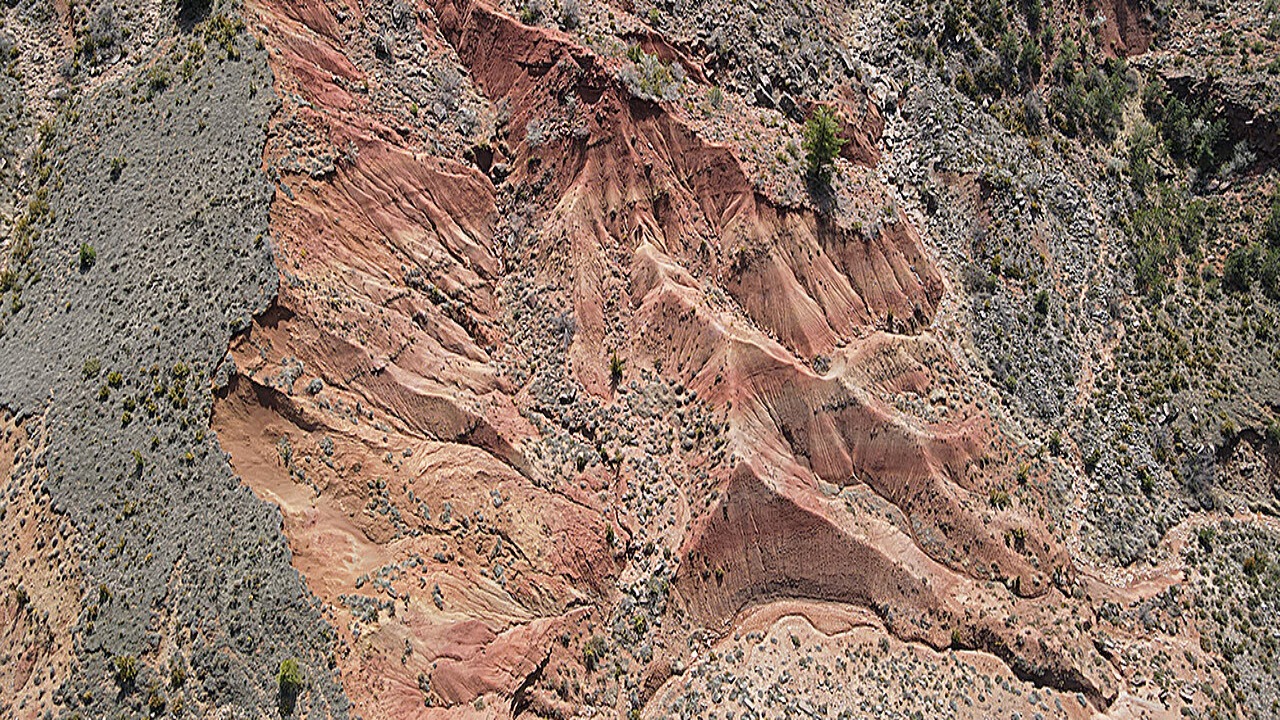
Drilling a horizontal well is like navigating underground without a map. The path forward runs through layers of rock you can’t see.
Build models to predict the geology along a horizontal wellbore. Your work will help automate and improve drilling operations in the oil and gas industry.
Roughly 10,000 horizontal wells are drilled worldwide every year, yet much of the drilling process still relies on manual interpretation by experts. These operations require immense technical precision, where even small deviations from the target zone can lead to significant resource waste. If the well drifts into less favorable geology, it results in inefficient energy recovery and may require additional corrective measures that increase the overall environmental footprint of the site.
Interpreting the subsurface is challenging because direct measurements are inherently limited. Data from wells, seismic surveys, and logging tools only show part of the picture. Rock layers start out stacked like a layer cake, but can bend or break along faults, making it hard to know exactly where the drill bit sits within the formation. Geologists and engineers analyze incoming data to steer the well, but current analytical tools often struggle to match the nuance of expert interpretation.
In this competition, you’ll develop machine learning models that predict the geology encountered along a horizontal wellbore. Your models should identify favorable layers from drilling data and help guide well placement more accurately during operations.
Your solution could help reduce resource waste by minimizing redundant drilling, improve operational safety by better predicting geological hazards, and move the industry toward automated systems that make faster, more consistent, and data-driven decisions.
A clearer map beneath the surface could make every meter count.
Awards:-
- 1st Place – $25,000
- 2nd Place – $13,000
- 3rd Place – $7,000
- 4th Place – $5,000
Deadline:- 06-08-2026